Job titles for Forest Operations graduates include:
- Operations Manager
- Forest Engineer
- Logistics Coordinator
- Infrastructure Specialist
- Project Manager
- Forest Technologist
- Environmental Analyst
- Registered Professional Forester
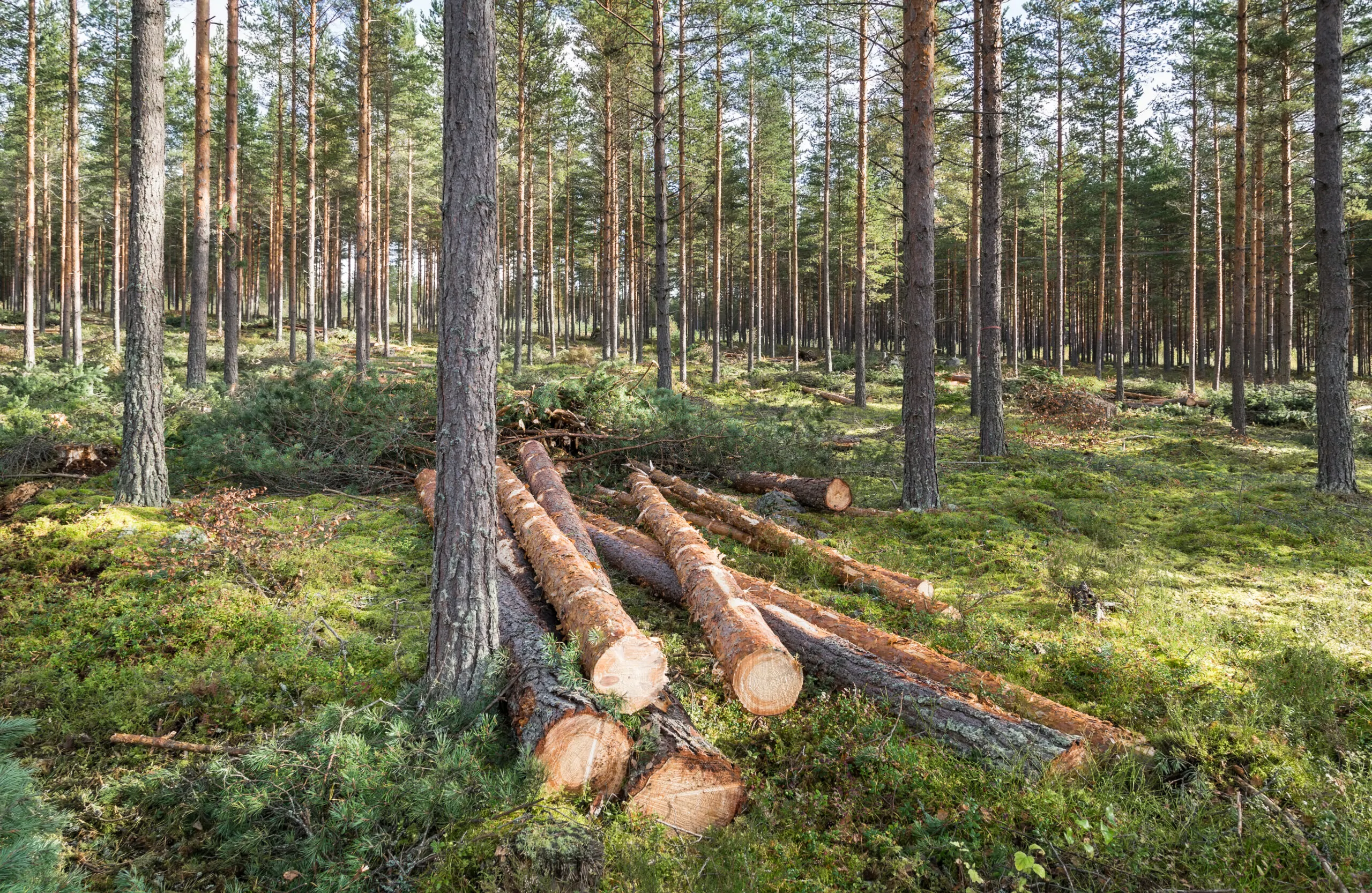
Forest operations is the applied science, engineering, and logistics of executing on-the-ground forestry activities, from road layout and slope stabilization to timber harvesting, transportation, and post-harvest site rehabilitation. This program concentrates on solving engineering problems, selecting appropriate harvesting systems, and safeguarding soil and watershed stability while maximizing operational efficiency.
How do you engineer a forest road across steep, unstable terrain? Which harvesting strategies deliver the safest, most cost-effective timber extraction with minimal disruption to habitats? How do you coordinate operations to optimize multi-million-dollar timber supply chains? Forest Operations teaches you the tactical science of operational forestry. You’ll gain the engineering and quantitative skills required to execute complex forest development plans.
You’ll learn how to design forest road networks, analyze soil mechanics to prevent landslides, evaluate cutting-edge machinery, and direct harvesting logistics across challenging terrain.
The Forest Operations curriculum is based on empirical field assessment, real-world surveying, and geotechnical concepts. You spend significant time outside testing machine configurations and engineering infrastructure in living environments.

Home of UBC FES, the Forest Sciences Centre (FSC) features over 240,000 square feet of classrooms, study spaces, and faculty research hubs inside a stunning glass-and-timber atrium.
UBC FES manages two forests, Malcolm Knapp Research Forest and Alex Fraser Research Forest, each situated in unique biomes. Together, they total more than 60,000 acres of living laboratory space dedicated to education, research, and experimentation.
Forest Operations is fully accredited by the Canadian Forestry Accreditation Board (CFAB), allowing graduates to become a Registered Professional Forester (RPF). The program is also accredited by the Society of American Foresters (SAF), qualifying graduates to pursue Certified Forester designations in the United States.
Forest Operations students benefit from hands-on applied engineering projects and studies, developing real-world expertise.

Pair your degree with a Minor in Commerce from UBC’s Sauder School of Business. Master foundational topics in financial accounting, marketing, organizational behavior, and business development.
Stand out in a competitive job market with a Certificate in Geomatics for Environmental Management. Develop highly marketable GIS and spatial analysis skills to turn data into actionable insights in environmental consulting, urban planning, conservation, forestry, and natural resources management.
Earn a Master of Management from UBC Sauder and a Bachelor of Science in Natural Resources simultaneously in only 4.5 years with the Dual Degree Program.

As a Forest Operations student in the FES Co-operative Education Program, you can integrate up to 5 paid work terms (20 months) into your degree, earning an average of $64,680. Receive resume, cover letter, interview preparation skills, and personalized career development and support.
Work placements span companies, provincial and federal ministries, and research institutions in fields like environmental consulting, forest engineering, woodland operations, ecosystem restoration and conservation.
There are many courses you can take in the Forest Operations program. Here are a few you might like.
Introduction to the systems, methods, and equipment used in sustainable forest harvesting, log transportation, road construction, and post-harvest rehabilitation.
Analyze ground-based, cable yarding, and aerial harvesting machinery. Evaluate machine cycle times, payload physics, production costs, and soil disturbance mitigation on steep slopes.
Study of forest hydrology and its role in forest operations planning, focusing on hydrologic and hydraulic design procedures for stream crossings, watershed protection, and the mitigation of operational impacts on aquatic ecosystems.
Exploration of sustainable forest policy and governance, with a focus on the development, implementation, and analysis of policies that balance environmental stewardship, economic priorities, and societal needs in forest management.
Step into operational roles overseeing the planning, construction, and execution of sustainable resource extraction and landscape restoration. As a Forest Operations graduate, you will hold the specialized engineering and logistical expertise needed to translate landscape management plans into safe, low-impact, cost-effective operations. Work in areas such as:
Job titles for Forest Operations graduates include:

“...I had the incredible opportunity to work in Northern Finland with Metsähallitus ltd. to learn all about how they manage all the public forests in Finland. Over...3.5 months, I had the privilege of working side by side with forest specialists, taking part in controlled burnings, restoring streams by creating fish spawning areas, and even participating in a reindeer herding! ”
English is the language of instruction at UBC. All prospective students must demonstrate English-language competency prior to admission. There are numerous ways to meet the English Language Admission Standard.
IB Diploma Programme
IB Certificate Courses
Note: Grade 11 Biology, Chemistry and Physics requirements listed above are only relevant to students who are not completing the equivalent IB Diploma Biology, Chemistry and/or Physics courses. For students studying outside of Canada, some examples of courses that may be accepted as Grade 11 equivalents are junior-level courses for American students, and IGCSE and O Level for those following British-patterned curricula.
The following subject categories are particularly relevant for this degree. Consider taking courses in these areas in Grade 11 and Grade 12.
“
If you’re unable to visit UBC in person, or you just want to get a sneak peek at your new home campus before you arrive, take one of our virtual tours. Current UBC students walk you through UBC’s residences, study spots, recreational facilities, lecture halls, academic buildings, and more.
Visit the Faculty of Forestry & Environmental Stewardship website to learn more about Forest Operations.
View full program details